
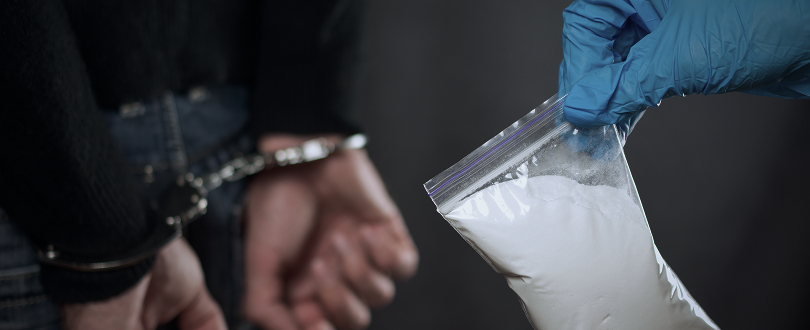
Have you been charged with a drug crime in New Jersey? State and federal prosecutors take these charges very seriously and pursue convictions with the full force of the law behind them. You need a compassionate New Jersey drug crime lawyer to level the playing field on your behalf.
Discover learn how seasoned attorney William Fay, Esq.’s determined approach can help you pursue a favorable resolution to your case. Contact William Fay, Esq. for a free, no-obligation case review.
Why Hire William Fay for Your Drug Crimes Defense in New Jersey?
If you’ve been accused of violating New Jersey drug laws, your choice of legal counsel is of utmost importance. That’s why you should turn to attorney William Fay for the legal representation you need.
Mr. Fay previously served as a deputy attorney general in the New Jersey Office of the Attorney General, providing him with critical insight into how the state prepares and prosecutes claims. He now leverages his experience to craft comprehensive, tailored legal strategies that help clients pursue positive outcomes in their criminal charges.
Every client has a unique case, which is why Mr. Fay takes time to thoroughly review the evidence and assess the specific circumstances of each client’s case to develop a tailored defense. He stands with clients through each stage of the criminal justice process to provide aggressive advocacy for their rights and interests.
As a born-and-bred New Jerseyan, Mr. Fay takes pride in being accessible to his clients, ensuring they can reach him directly via cell phone and never have to go through a legal assistant or paralegal. When you hire him, you can expect him to provide you with reliable service and to personally handle every aspect of your case from beginning to end. Mr. Fay will never hand your case off to an associate or a junior attorney.
Our firm takes a results-driven approach to handling your case, striving for the best possible results under the specific facts and circumstances of your case. Contact us today for your free, fully confidential initial consultation with a New Jersey drug crime attorney, and let us put our considerable experience to work for you.
Why Do You Need a Lawyer When Facing Drug Charges?
You have rights following a drug arrest, but to protect them effectively, you’ll need help from an experienced drug crime lawyer in New Jersey. As your attorney, Mr. Fay can:
- Independently investigate your charges to find evidence that may help build a defense
- Review the facts of your case to determine potential case strategies you can pursue to obtain a more favorable outcome to your charges
- Help you make informed decisions by ensuring you understand the details of your charges and the possible outcomes
- Challenge the prosecution’s evidence and case at every opportunity to pursue a reduction or dismissal of your charges, if possible
- Fight for the best result under the circumstances of your case, even when that means going to trial to contest your charges or assert your innocence
What Types of Drug Crime Cases Does William Fay Handle?
Mr. Fay has a solid track record of achieving the best results for clients — from full acquittal and charges being dropped to reduced charges — in cases involving offenses under New Jersey drug laws. They include the following:
- Possession of a controlled dangerous substance (CDS)
- Possession of marijuana
- Marijuana distribution and possession with intent to distribute
- Cocaine possession and distribution
- Heroin possession and distribution
- Possession and distribution of OxyContin
- Possession and distribution of methamphetamine
- Possession and distribution of MDMA (i.e., ecstasy, Molly)
- Intent to distribute CDS and distribution
- Synthetic marijuana possession and distribution
- Prescription drug offenses
- Possession of CDS in a motor vehicle
- Possession of drug paraphernalia
- School zone drug distribution and intent to distribute
- Possession of a hypodermic needle or syringe
- Obtaining CDS by fraud
What Are Common Defenses in New Jersey Drug Possession Cases?
There are several potential defenses to a charge of violating New Jersey drug possession laws. However, the ones that could work best for you will depend on the facts and circumstances of your case. The following are some of the most common defense strategies used in drug possession cases:
- Lack of Possession – Defendants may deny having actual (physical) or constructive (legal control) possession of drugs seized by police.
- Lawful Possession – A defendant may present evidence of a valid prescription to prove they lawfully possessed controlled substances found by police.
- Lack of Intent – When a charged offense requires a defendant to have acted with a degree of mental culpability (e.g., knowingly, willfully, recklessly), a defendant may argue that the prosecution cannot prove that they acted with the required level of intent.
- Lack of Evidence of Substance’s Identity – A defendant may highlight the prosecution’s failure to conduct laboratory testing to confirm the identity of a substance seized by police as an illicit controlled substance.
- Breaks in the Chain of Custody – When police and prosecutors fail to document the handling of evidence, a defendant may highlight a break in the chain of custody of the evidence to raise doubts about the identity or source of the substances presented into evidence by the prosecution.
- Unlawful Searches – A defendant may seek to exclude evidence of drugs from the prosecution’s case by arguing that police obtained the evidence through an illegal search that lacked a warrant or an improper warrantless search that lacked probable cause and exigent circumstances. A defendant may also seek to exclude inculpatory statements and evidence obtained through the use of their statements by arguing that police violated the defendant’s rights during an interrogation.
How Can You Protect Your Rights During and After a Drug Arrest?
You can best protect your rights and lay the groundwork for a strong defense by taking the following steps during and after a drug arrest:
- Invoke your right to remain silent, respectfully decline to answer the police’s questions about your charges, and refrain from talking to officers, detectives, or prosecutors.
- Invoke your right to legal counsel and ask to speak to a criminal defense attorney as soon as possible while in police custody.
- Avoid speaking to potential witnesses in your case, and refrain from discussing your charges with family members or friends or posting about your case on social media.
- Contact a criminal defense lawyer as soon as possible to discuss your options for resolving your charges.
What Are New Jersey’s Drug Possession Laws?
Under New Jersey’s drug possession law, N.J.S. §2C:35-10, a person may commit a crime if they knowingly or purposely obtain or possess a controlled dangerous substance or controlled substance analog, unless the person receives the substance directly from or pursuant to a valid prescription from a practitioner acting in the course of their professional practice.
However, the law states that, following the legalization of recreational marijuana in New Jersey, possession of 6 ounces or less of marijuana or 17 grams or less of hashish does not constitute a crime, offense, act of delinquency, or civil violation of law.
What Are the Sentences for Drug Felonies and Misdemeanors in New Jersey?
The penalties a defendant might face upon conviction for a drug crime depend on several factors, including whether the crime is charged as an indictable offense (a felony) or a disorderly persons offense (a misdemeanor).
For example, possession of Schedule 1 or 2 drugs constitutes a third-degree crime under New Jersey law, which carries a penalty of three to five years in prison and potential fines of up to $35,000. Possession of Schedule 3 and 4 drugs also constitutes a third-degree crime. Possession of Schedule 5 drugs constitutes a fourth-degree crime, which carries a penalty of up to 18 months in prison and a potential fine of up to $15,000.
New Jersey law imposes much harsher penalties for convictions for manufacturing, distributing, or unlawfully dispensing a controlled substance. The grading of an offense of unlawful manufacturing, distributing, or dispensing will depend on the type of controlled substance involved in the offense.
What Are the Different Drug Schedules?
New Jersey and federal law classify controlled substances into different “schedules.” The schedule classification for a drug depends on the potential for abuse and the accepted medical uses for the drug. Drug schedules include both New Jersey legal drugs and illegal drugs. The following are examples:
- Schedule I controlled substances include drugs that have a high potential for abuse and no accepted medical uses in the U.S., such as heroin, LSD, mescaline, and psilocybin.
- Schedule II controlled substances include drugs with a high potential for abuse but also currently accepted medical uses or use with severe restrictions, such as opium, cocaine, fentanyl, and methadone.
- Schedule III controlled substances include drugs that have less potential for abuse than Schedule I or II controlled substances and accepted uses in medical treatment, such as amphetamine, ketamine hydrochloride, and mixtures containing codeine.
- Schedule IV controlled substances include drugs with a low potential for abuse compared to Schedule III drugs and accepted medical uses, such as barbital.
- Schedule V controlled drugs have a low potential for abuse compared to Schedule IV drugs and accepted medical uses, such as mixtures containing limited quantities of codeine.
Contact a New Jersey Drug Crime Defense Attorney Today
Have you been arrested for drug trafficking, federal drug charges, or another drug-related offense in New Jersey? If so, you need professional legal counsel to defend your interests and freedom. Contact William Fay, Esq. today for a free, confidential consultation over the phone or in person. Discover the value of focused, results-driven advocacy that Mr. Fay, an experienced drug possession lawyer, can provide.